
How to stop snoring: what to try, and how to tell if it worked
The NHS recommends a short list for snoring: sleep on your side, lose weight if you're overweight, don't smoke, limit alcohol, and avoid sleeping pills [1]. The difficulty is knowing whether a change worked, because you're asleep when it does. Change one thing at a time and record the nights.
Last reviewed 24 September 2026. General information from the Snorezy team, not medical advice.
What the NHS recommends
Self-help steps from the NHS guidance on snoring [1]:
- Sleep on your side. The NHS suggests something as simple as a tennis ball sewn into the back of your sleepwear to stop you rolling over.
- Lose weight if you're overweight.
- Don't smoke.
- Limit alcohol, especially in the evening.
- Avoid sleeping pills, which can make snoring worse.
- If your snoring keeps a partner awake, earplugs for them are a fair interim measure.
Nasal strips, pillows and mouthguards
Many people also try nasal strips, an extra pillow or a mouthguard. Evidence for over-the-counter products varies, and we won't claim any of them works for you. A mouthguard fitted by a qualified dentist is a different thing: oral appliance therapy is a recognised clinical treatment for snoring and for sleep apnea [2].
Test one change at a time
Change one thing, keep everything else as normal as you can, and compare a few nights with it against a few without. If you change three things on the same night, you won't know which one helped.
When it's not a remedy question
If you're told you stop breathing, choke or gasp in your sleep, or you're sleepy during the day, see a doctor rather than trying more remedies. Those can be signs of sleep apnea, which needs a proper test [1]. See sleep apnea.
In Snorezy
See whether it worked
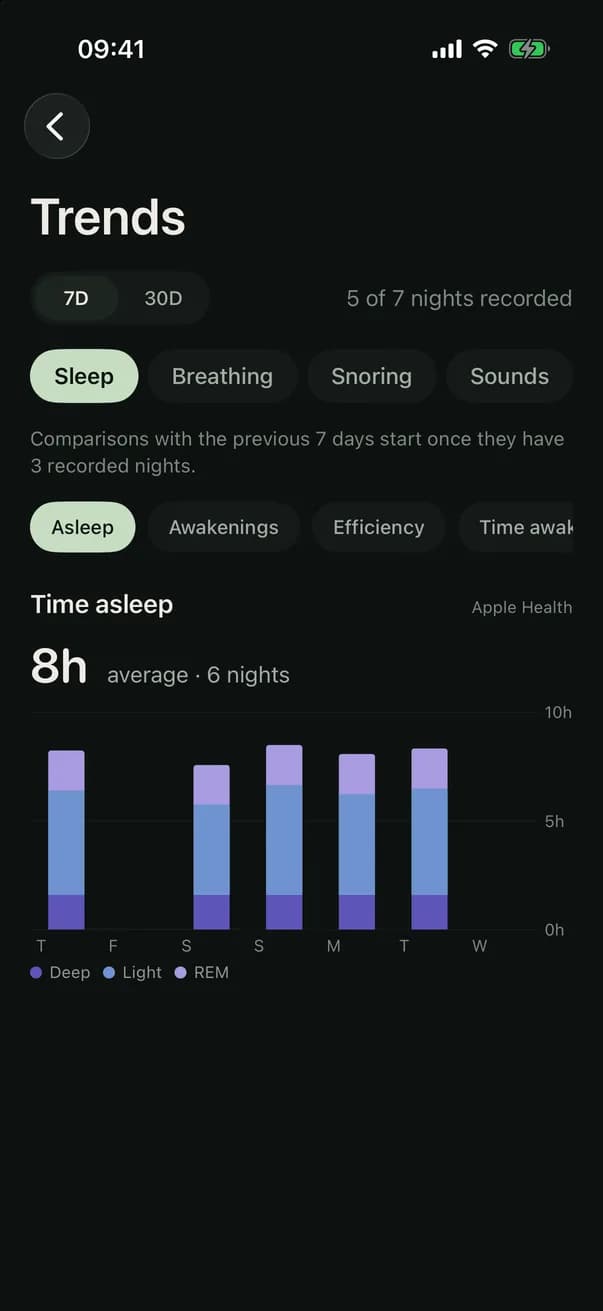
Tag the change in "Anything different tonight?" (side sleeping, a nasal strip, a mouthguard, an extra pillow, no alcohol) and record as usual. Snorezy's Trends compares snoring on the nights you tagged with the nights you didn't, and says how many nights the comparison rests on.
Questions
What is the fastest way to stop snoring?
For many people, sleeping on their side and not drinking in the evening are the quickest changes to try [1]. Whether they work for you is something a few recorded nights can show.
Do anti-snoring mouthguards work?
Dentist-fitted oral appliances are a recognised treatment for snoring and sleep apnea [2]. For over-the-counter devices, results vary between people.